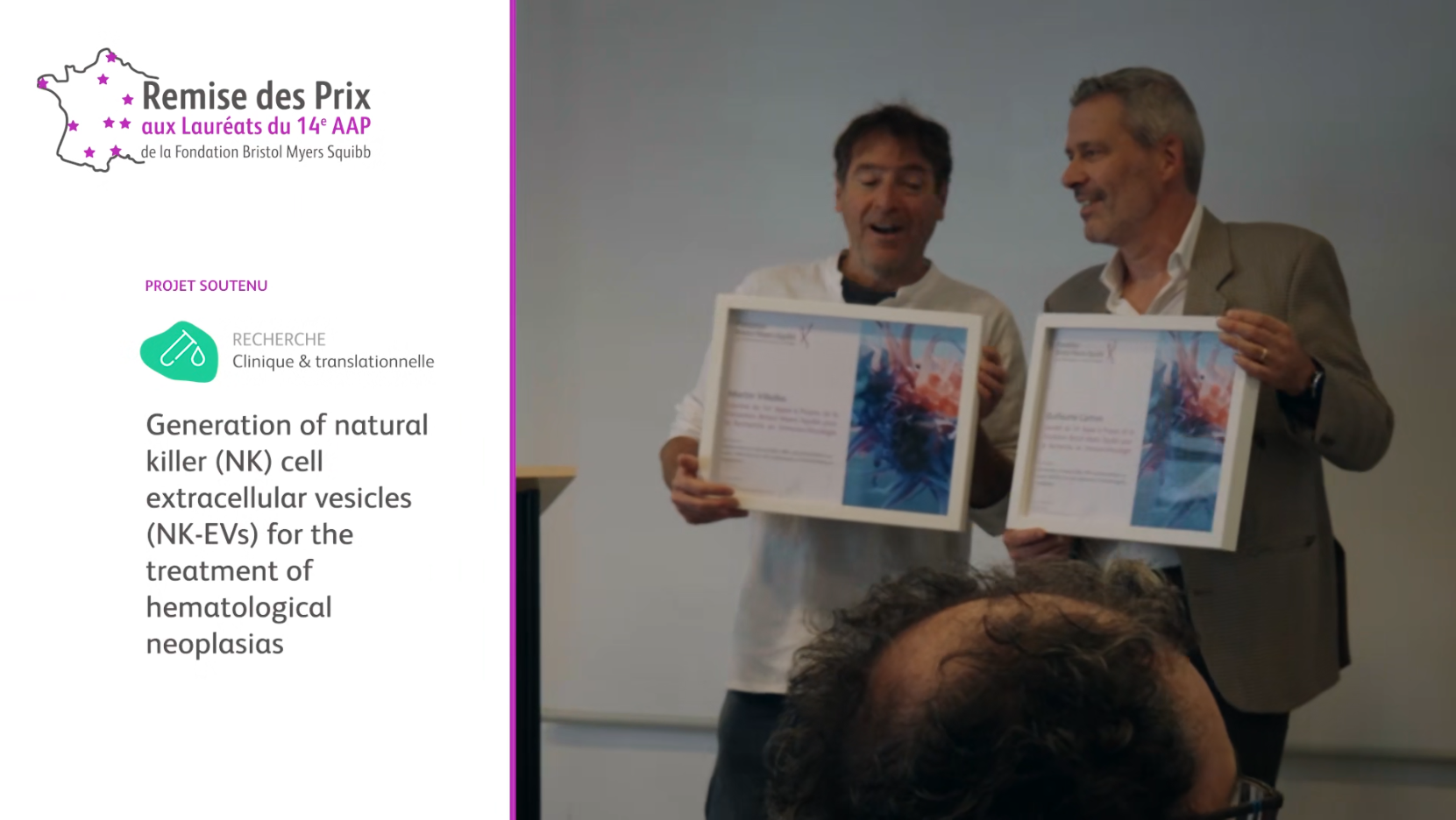
Découvrez l’interview de Martin Villalba


CAR-T cells have transformed the treatment of B-cell malignancies, demonstrating remarkable clinical efficacy. Similarly, CAR-Natural Killer (CAR-NK) cells have shown promise in targeting B-cell neoplasms. NK cells, which mediate antibody-dependent cellular cytotoxicity (ADCC), play a crucial role in the clinical efficacy of several monoclonal antibodies (mAbs), including the anti-CD20 rituximab (RTX). We developed protocols for the expansion of NK cells (eNK), which are currently undergoing clinical evaluation by the companies Emercell and Cytea Bio. To enhance the specificity of eNK, we developed the PINTM technology, which has been licensed to Cytea Bio. PINTM utilizes Fc-modified SDH-mAbs, such as SDH-RTX (anti-CD20), to arm NK cells, thus giving them enhanced specificity for targeting cancer cells expressing CD20.
We used a similar technology to arm extracellular vesicles (EVs) derived from eNK cells (NK-EVs) as a non-cellular therapeutic platform. EVs derived from SDH-armed NK cells inherit the target specificity of their parental NK cells. Moreover, our NK-EVs can be armed after cryopreservation allowing the development of the large amounts needed for clinical purposes.
The aim of this project is to evaluate the clinical potential of these armed NK-EVs for treating B-cell malignancies. Importantly, multiple specificities can be conferred to NK-EVs by arming them with multiple SDH-modified mAbs, e.g. NK-EVs with specificity for both CD19+ and/or CD20+ target cells.